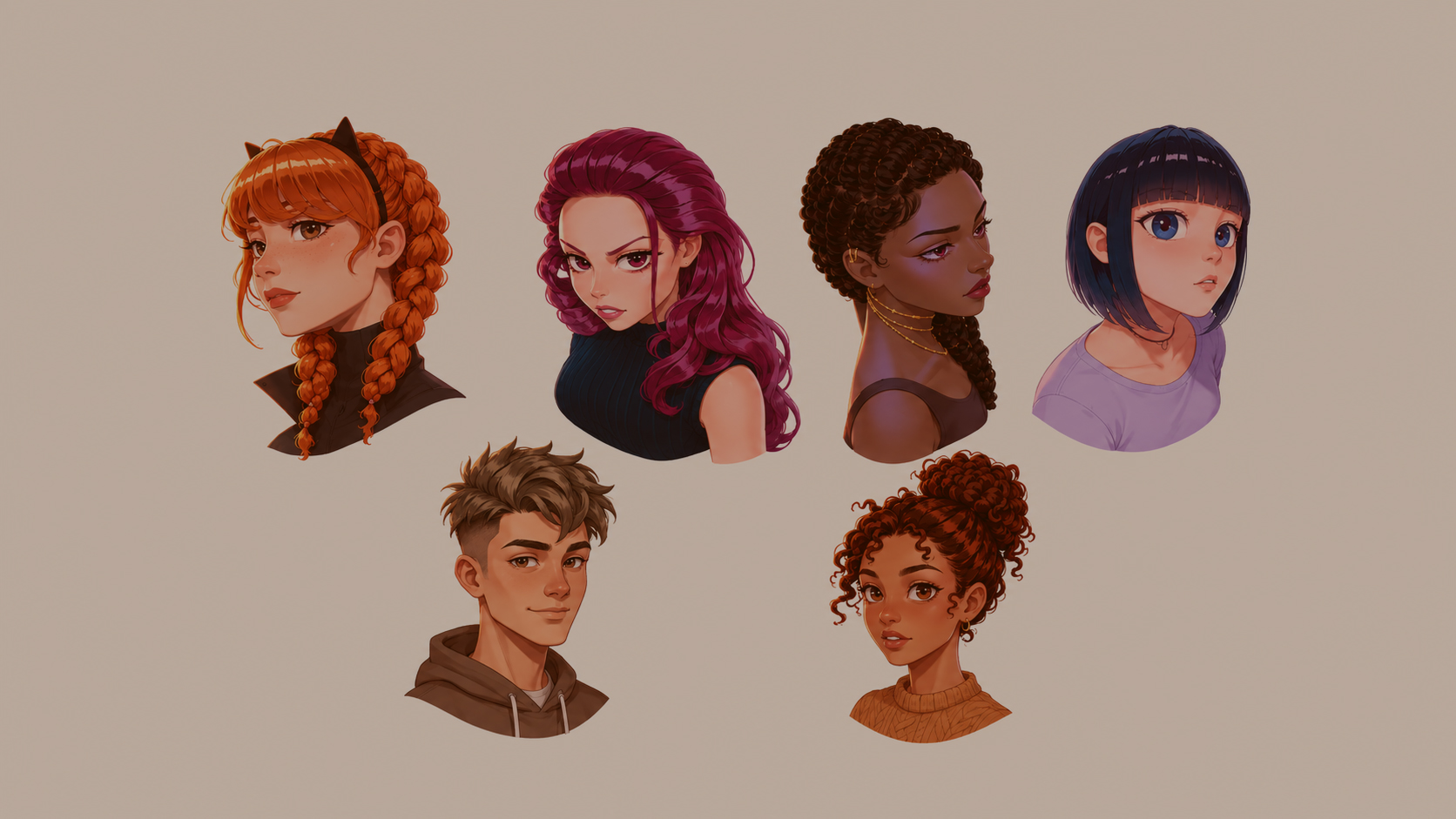
02 · Character Creation Masterclass

Create Characters Readers Remember

Learn how to build complete character profiles, preserve important memories, define relationships, and create meaningful character development throughout your book.

4 lessons 20-minute track Beginner to intermediate Reading tutorial
0 of 4 lessons completed0%
Character Creation Masterclass
Character Masterclass4 Lessons
Lesson 1 of 4 5 minutes

Character Profiles

A strong character is more than a name, appearance, or occupation.

Memorable characters have goals, fears, habits, beliefs, strengths, weaknesses, and contradictions. These details influence how they speak, react, make decisions, and change throughout the story.

StoryMaster AI can help you build structured character profiles before you begin writing chapters.

Why character profiles matter

A clear profile helps you:

  • Maintain personality consistency
  • Write more natural dialogue
  • Understand character decisions
  • Avoid changing important details accidentally
  • Generate more consistent illustrations
  • Build stronger relationships
  • Create believable character development

Without a profile, a character may behave differently from one chapter to another without a clear reason.

Start with the character's role

First, define why the character exists in the story.

Common roles include:

  • Main character
  • Supporting character
  • Mentor
  • Friend
  • Rival
  • Antagonist
  • Parent or guardian
  • Comic relief
  • Guide
  • Love interest
  • Narrator

A character's role should support the story, not simply fill space.

Build the core identity

A useful character profile should include:

Basic information

  • Name
  • Age
  • Occupation or role
  • Home or location
  • Family background
  • Education or experience

Appearance

  • Height and build
  • Hair
  • Eyes
  • Clothing style
  • Distinctive features
  • Typical facial expression
  • Accessories

Personality

  • Strengths
  • Weaknesses
  • Habits
  • Likes
  • Dislikes
  • Sense of humour
  • Communication style
  • Behaviour under pressure

Inner world

  • Main goal
  • Greatest fear
  • Core belief
  • Secret
  • Regret
  • Motivation
  • Emotional need

Goals and motivations

A character should want something.

The goal may be external:

  • Win a competition
  • Find a missing person
  • Protect a community
  • Build a successful company
  • Return home
  • Solve a mystery

The goal may also be internal:

  • Gain confidence
  • Learn to trust
  • Accept responsibility
  • Forgive someone
  • Overcome fear
  • Find a sense of belonging

The external goal drives the plot. The internal need creates emotional depth.

Strengths and weaknesses

Perfect characters are difficult to believe.

Give each important character a balance of positive and difficult qualities.

Example

Strength: Highly intelligent — Weakness: Refuses to ask for help

Strength: Loyal — Weakness: Protects friends even when they are wrong

Strength: Brave — Weakness: Acts before thinking

A weakness should influence the story rather than exist only as a description.

Add contradictions

Real people are often contradictory.

A character might be:

  • Confident in public but insecure in private
  • Kind to strangers but distant with family
  • Highly organised but emotionally impulsive
  • Brave in dangerous situations but afraid of rejection
  • Honest in most situations but protective of one secret

Contradictions make characters feel human and unpredictable.

Profile-writing prompt

Use this structure when creating a character in StoryMaster:

"Create a detailed character profile for a 14-year-old inventor named Arian Vale. He is curious, intelligent, and loyal, but also impatient and secretive. His main goal is to find his missing brother. He carries a worn notebook and handmade tools. Include his motivations, fears, strengths, weaknesses, speaking style, visual details, and role in the story."

StoryMaster example

Character name: Arian Vale

Role: Main character

Age: 14

Story role: A young inventor who discovers that one of his machines can open doorways into forgotten worlds.

Main goal: Find his missing older brother.

Greatest fear: That his inventions cause more harm than good.

Internal need: Learn that responsibility does not mean solving every problem alone.

  • Strengths: Creative, Curious, Loyal, Persistent
  • Weaknesses: Impatient, Secretive, Blames himself easily, Ignores warnings
  • Visual details: Dark curly hair, Round glasses, Worn leather notebook, Utility jacket with handmade tools, Ink stains on his fingers
Key takeaway

A strong character profile explains not only who the character is, but also what they want, what they fear, and why they behave the way they do.

Lesson 2 of 4 5 minutes

Character Memory

Characters are shaped by what has happened to them.

Their memories influence their beliefs, fears, relationships, habits, and decisions. StoryMaster can use these details to maintain stronger continuity across chapters.

Character memory does not mean storing every event. It means preserving the experiences that matter.

What should be remembered

Important character memories may include:

  • Childhood experiences
  • Major successes
  • Personal failures
  • Promises
  • Losses
  • Betrayals
  • Friendships
  • Family events
  • Important discoveries
  • Previous conflicts
  • Lessons learned
  • Secrets revealed

These experiences should affect later behaviour.

Long-term memory

Long-term memory contains events that shaped the character before the story began.

Examples:

  • A parent disappeared when the character was young
  • A teacher encouraged the character's talent
  • A past mistake damaged a friendship
  • The character once failed during an important test
  • A promise was made to protect someone

Long-term memories explain why the character enters the story with certain beliefs or fears.

Story memory

Story memory contains events that happen during the book.

Examples:

  • The character discovers a hidden location
  • A friend breaks a promise
  • The character learns an important secret
  • A previous enemy offers help
  • An object is lost or damaged
  • A relationship changes
  • A character makes a difficult decision

These events must remain consistent in later chapters.

Emotional memory

Characters should remember not only what happened, but how it made them feel.

The same event may affect two characters differently.

For example, after losing a competition:

  • One character becomes more determined
  • Another becomes afraid to try again
  • Another blames a teammate
  • Another realises winning was never the real goal

The emotional interpretation is often more important than the event itself.

How memory affects behaviour

A useful memory should influence the present.

Example

Past event: Arian's invention once caused an accident.

Resulting belief: He believes his ideas may hurt other people.

Present behaviour: He hides his newest invention instead of asking for help.

This creates a logical connection between the past and the current story.

Maintain continuity

Before generating a new chapter, confirm important facts such as:

  • What the character already knows
  • What the character does not know
  • Who the character trusts
  • What promises have been made
  • Which events have already occurred
  • Which secrets remain hidden
  • What injuries, losses, or changes have happened
  • How the character currently feels

This prevents characters from forgetting important events without explanation.

Create a memory timeline

For major characters, organise important events into a simple timeline.

Before the story

  • Arian and his brother built their first machine together
  • The machine failed publicly
  • Arian stopped showing his inventions to others

Early story

  • His brother disappears
  • Arian discovers the doorway machine
  • He decides to search alone

Middle story

  • He learns that his secrecy puts others at risk
  • He begins trusting his friends
  • He discovers his brother may have entered willingly

Later story

  • He must decide whether to destroy or use the machine
  • He accepts help from others
  • He learns to take responsibility without isolating himself

Avoid artificial reminders

Do not repeat the same memory in every chapter.

Instead, reveal it naturally through:

  • Dialogue
  • Reactions
  • Decisions
  • Dreams
  • Objects
  • Locations
  • Conflict
  • Brief internal thoughts
Memory prompt for StoryMaster

"Remember that Arian previously caused an accident with one of his inventions. Because of this, he hides his current work and avoids asking for help. In later chapters, this memory should influence his decisions until he gradually learns to trust his friends."

Key takeaway

Character memory creates continuity. Past experiences should influence present choices, emotions, and relationships.

Lesson 3 of 4 5 minutes

Character Relationships

Characters become more interesting through their relationships with other people.

A relationship creates emotion, conflict, loyalty, tension, support, misunderstanding, and change.

Strong relationships should develop throughout the story rather than remain static.

Define the relationship type

Common relationship types include:

  • Friends
  • Siblings
  • Parent and child
  • Mentor and student
  • Rivals
  • Enemies
  • Teammates
  • Colleagues
  • Leader and follower
  • Romantic partners
  • Strangers who become allies

The label alone is not enough. You must also define how the characters feel about each other.

Build the relationship foundation

For every important relationship, define:

  • How they met
  • What connects them
  • What they admire about each other
  • What creates tension
  • What they misunderstand
  • What they need from each other
  • What they are afraid to reveal
  • How the relationship may change

Use differences to create tension

Characters do not need to dislike each other to create conflict.

Tension can come from different:

  • Values
  • Goals
  • Communication styles
  • Levels of trust
  • Responsibilities
  • Backgrounds
  • Methods
  • Beliefs

Example

Arian wants to act immediately.

His friend Mara wants to plan carefully.

Both want to find Arian's brother, but their methods create conflict.

Create relationship dynamics

A relationship should have movement.

Possible developments include:

  • Strangers become friends
  • Friends become rivals
  • Rivals become allies
  • Trust is gained
  • Trust is broken
  • A mentor disappoints a student
  • A sibling relationship becomes stronger
  • An enemy reveals a shared goal
  • A misunderstanding is resolved

The change should happen because of events and choices.

Give both characters influence

A strong relationship changes both people.

Weak version

Mara exists only to help Arian.

Stronger version

Mara helps Arian become more thoughtful, while Arian helps Mara become more willing to take risks.

Both characters contribute to the relationship.

Show relationships through action

Do not explain every relationship directly.

Show it through:

  • The way characters speak
  • What they notice
  • What they hide
  • How they respond under pressure
  • Whether they interrupt or listen
  • Who makes decisions
  • What they are willing to sacrifice
  • How they behave after conflict

Avoid identical dialogue

Each relationship should have its own tone.

A character may speak differently with:

  • A parent
  • A close friend
  • A rival
  • A teacher
  • A stranger
  • A younger sibling

This makes dialogue more believable.

Example relationship profile

Characters: Arian Vale and Mara Sen

Relationship: Childhood friends

Shared goal: Find Arian's missing brother

Strength: They trust each other's intelligence

Tension: Arian acts impulsively, while Mara wants evidence and preparation

Hidden concern: Mara believes Arian may be more interested in proving his invention works than understanding what happened to his brother

Development: Their friendship becomes strained when Arian hides an important discovery. Later, he admits the truth and begins involving Mara in decisions.

Key takeaway

Strong relationships are built from shared history, emotional tension, trust, conflict, and change.

Lesson 4 of 4 5 minutes

Character Arcs

A character arc is the emotional or psychological change a character experiences during the story.

The plot explains what happens. The character arc explains how those events change the character.

A meaningful arc gives the story emotional impact.

Start with the character's current state

Before creating an arc, define who the character is at the beginning.

Ask:

  • What does the character believe?
  • What are they afraid of?
  • What mistake do they repeatedly make?
  • What are they avoiding?
  • What do they think they need?
  • What do they actually need?

Define the internal problem

The internal problem is often a false belief.

Examples:

  • I must solve everything alone
  • Trusting people makes me weak
  • Failure means I have no value
  • People never change
  • Power is more important than kindness
  • I must hide who I really am

The events of the story should challenge this belief.

Common character arc types

Positive arc

The character overcomes a limiting belief and grows.

Example: A secretive character learns to trust others.

Negative arc

The character makes increasingly harmful choices and becomes worse.

Example: An ambitious leader becomes obsessed with control.

Flat arc

The character remains true to a strong belief but changes the people or world around them.

Example: A principled character helps others recover their courage.

Not every character needs a dramatic transformation, but important characters should experience meaningful consequences.

Build the arc in stages

A simple positive character arc may follow this structure:

Stage 1: Existing belief

The character believes they must work alone.

Stage 2: Challenge

The character faces a problem they cannot solve alone.

Stage 3: Resistance

They reject help and make the situation worse.

Stage 4: Realisation

They understand that their belief is limiting them.

Stage 5: Choice

They choose a new way of behaving.

Stage 6: Proof

Their final action demonstrates the change.

Connect the arc to the plot

The arc should not happen separately from the main story.

The plot must force the character to confront their weakness.

For example:

  • A distrustful character must depend on someone else
  • A selfish character must choose between personal gain and another person's safety
  • A fearful character must act despite fear
  • A dishonest character must reveal the truth
  • A controlling character must surrender responsibility

Track the arc across chapters

For each chapter, ask:

  • What does the character believe at this point?
  • What event challenges that belief?
  • How do they respond?
  • Do they improve or resist?
  • What changes in their behaviour?
  • What remains unresolved?

The change should feel gradual.

Avoid sudden transformation

A character should not completely change after one conversation unless the story has carefully prepared that moment.

Believable change usually includes:

  • Resistance
  • Mistakes
  • Partial progress
  • Setbacks
  • Difficult choices
  • Consequences
  • Final proof

Character arc prompt for StoryMaster

"Create a positive character arc for Arian Vale. At the beginning, he believes he must solve every problem alone because he is afraid others will judge his past mistakes. Across the story, challenge this belief through conflict, failed decisions, and changing relationships. By the ending, show through his actions that he has learned to trust others and accept shared responsibility."

Example character arc

Beginning: Arian believes that asking for help will expose his mistakes.

Early conflict: He hides the doorway machine from his friends.

Consequence: His secrecy causes someone else to become trapped.

Realisation: He understands that isolation is creating greater danger.

Final choice: He shares everything he knows and asks the group to help him.

End state: He remains independent and inventive, but no longer believes responsibility means acting alone.

Key takeaway

A meaningful character arc shows how the story's events challenge a character's beliefs and lead to visible change.

Track completion

Complete all four lessons to finish this track

0 of 4 lessons completed·0% complete
1.5k+
Happy Authors

Join Our Author Community

Get writing tips, publishing hacks, and the latest updates from StoryMaster AI straight to your inbox.